
Why swapping one word can change reality
Three guys walk into a bar. They belly up to the counter and sit near an older gentleman. The graybeard, alone but accompanied by five empty beer bottles with a sixth in hand mid-sip, watches them with mild interest.
“Dining, are we?” he asks.
The trio exchanges confused glances before shaking their heads. “No,” they reply, in unison.
As the night unfolds, it doesn’t take long for the group to collectively pile up more empty bottles than the old man; service is slow tonight.
“Looks like dining to me,” the old man insists.
Despite their growing inebriation, the group tries to maintain politeness. “We’re just here to drink,” says one of them.
With a furrowed brow, the old man looks at them, genuinely puzzled.
This strange exchange continues throughout the night. The old man insists they’re dining, while the group maintains they’re just drinking. Awkward silences always follow, punctuated only by the clinking and clanking of bottles.
In English, most people would agree that this doesn’t constitute dining but rather drinking. Perhaps the old man’s mix-up is simply the result of not having anyone by his side to tell him he’s had a few too many drinks. Whatever the case, his miscommunication highlights something bigger: how subtle changes in language can skew reality.
On a daily basis, we’re exposed to this subtle change, and it has nothing to do with alcohol consumption, but instead subtle linguistic reframing. Take gamblers, for example.
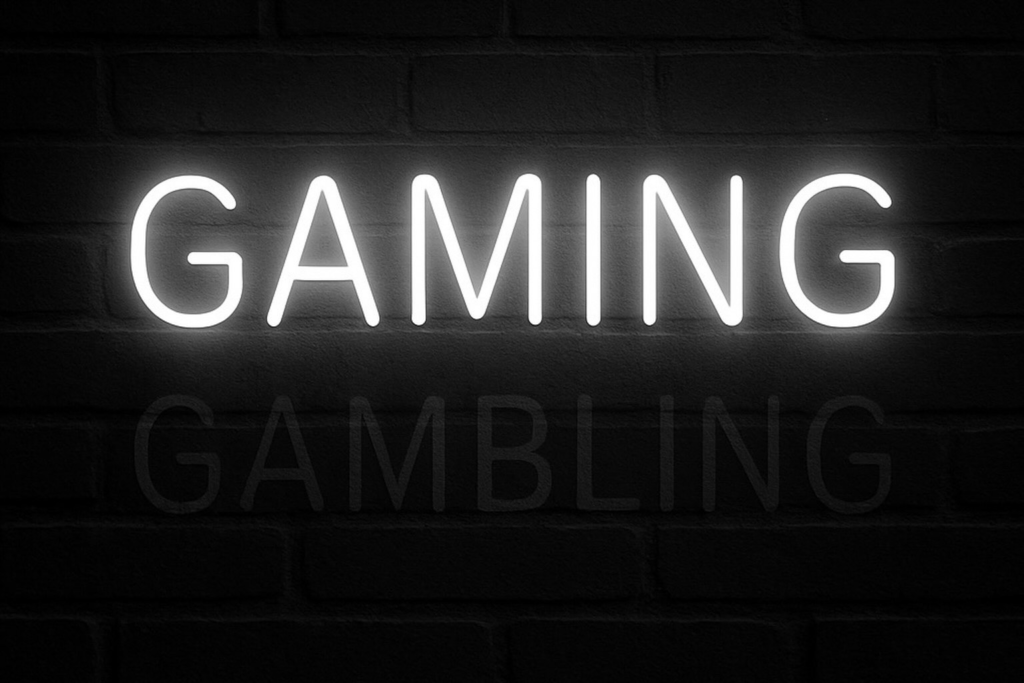
Over time, the wording for their activity has shifted from gambling to gaming. This might seem like a minor distinction, but it’s a deliberate linguistic shift. Why? Perhaps the industry hopes that by tweaking the terminology, we won’t notice or won’t care. After all, they’ve only removed two letters that were smack dab in the middle, everything else is the same. However, this shift might sanitize how the activity is perceived by the public.
Forget about ranges or shades of meaning, gaming is what people do when they play video games or board games. So why has the gambling industry appropriated this term? My best guess is that the wording makes it sound more like entertainment and less associated with financial risk.
Let’s properly separate the two terms: gambling is gambling, and gaming is gaming. There’s no need for subtle reframing when it comes to naming something. This is a good opportunity to attempt an answer at Shakespeare’s centuries-old question from Romeo and Juliet: “What’s in a name? A rose by any other name would smell as sweet.”
Do names matter? When it comes to gambling, absolutely.
The way language is used doesn’t just affect the meaning of words, it changes the way we perceive reality. In an age that blinds us with a blizzard of information, where every brand and industry does whatever it takes to generate revenue, understanding how language is used to shape perception is more important than ever.